
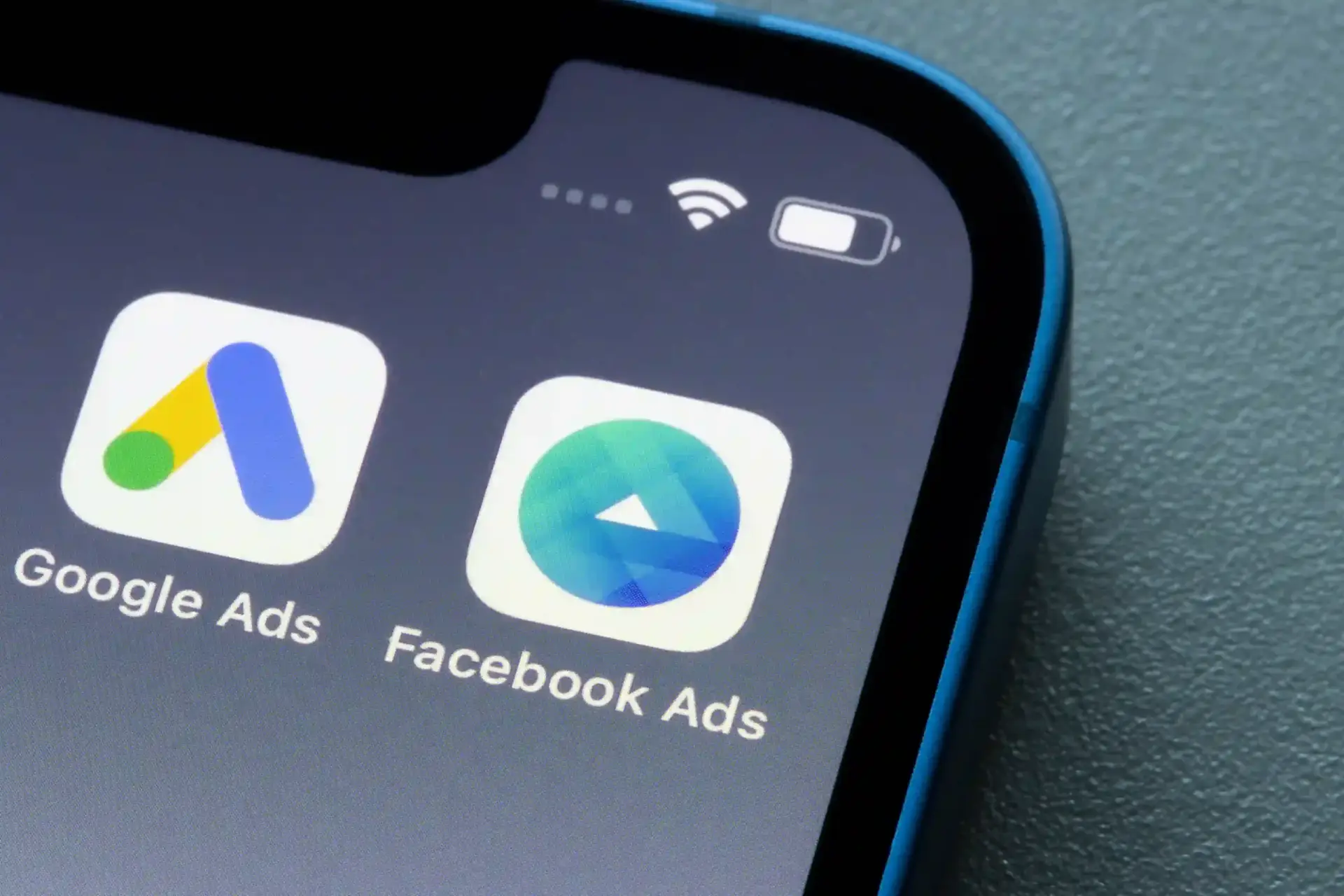
As the owner of a B2B service business, you often face the classic dilemma: Should you invest your marketing budget in Google Ads or Facebook? Here is your guide to making the right choice.
The key difference: intent vs. interest
Google Ads captures customers with high purchase intent
When someone searches for “commercial cleaning Copenhagen” or “office cleaning prices”, they are already in buying mode. They have a specific need and are actively looking for a solution. That is why Google Ads typically delivers 20–30% higher ROI for high-intent searches compared to Facebook.
Facebook builds awareness and interest
Facebook, on the other hand, excels at creating awareness and interest among potential customers who do not yet know they need your service. The platform is 40% more effective for awareness campaigns and can reach audiences you would never encounter through search.
The 2026 ROI figures: What can you expect?
Google Ads ROI benchmarks:
B2B service businesses: 300–500% ROI
Average cost per click: DKK 15–45 (depending on industry)
Conversion rate: 3–8% for service businesses
Facebook Ads ROI benchmarks:
B2B campaigns: 400–500% ROI (when properly optimised)
Lower cost per click: DKK 5–15
Lower conversion rate: 1–3%, but greater reach
When should you choose Google Ads?
Google Ads is your first choice when:
You have a limited budget and need to maximise every krone
Your customers are actively searching for your service (such as “commercial cleaning”)
You sell a high-value service with a long decision-making process
You want fast, measurable results
Real-world example: A Danish cleaning company spends DKK 8,000 per month on Google Ads and achieves a customer acquisition cost of just DKK 350 per customer, with an average contract value of DKK 3,500 per year. That delivers an ROI of 1000% in the first year alone.
When should you choose Facebook?
Facebook is your best option when:
You want to build brand awareness over time
Your target audience is not actively searching for your service yet
You have visual content that can engage (before/after images, videos)
You want to reach a broader audience at lower cost
Strategic advantage: Facebook’s algorithm is getting better and better at finding potential customers based on behavioural patterns, not just keywords.
The winning combination: the hybrid strategy
The most successful B2B companies do not choose either/or, but both:
Phase 1: Facebook for awareness
Allocate 30% of the budget to Facebook
Focus on video content and before/after case studies
Build custom audiences for retargeting
Phase 2: Google Ads for conversion
Allocate 70% of the budget to Google Ads
Target high-intent keywords such as “commercial cleaning” + location
Optimise landing pages for conversion
Phase 3: Retargeting on both platforms
Retarget Facebook traffic with Google Ads
Use Facebook to re-engage Google visitors
Practical optimisation tips
For Google Ads:
Start with exact match keywords such as [commercial cleaning Copenhagen]
Use negative keywords aggressively (avoid private customers if you only want B2B)
Test different ad extensions (location, pricing, certifications)
Focus on Quality Score to reduce costs
For Facebook:
Test different audience segments (office staff, facility managers)
Use video content (50% higher engagement)
Implement the Facebook Pixel for better tracking
Test different campaign objectives
Measurement and optimisation: the key metrics
Google Ads KPIs:
Cost per acquisition (CPA)
Return on ad spend (ROAS)
Quality Score
Search impression share
Facebook KPIs:
Cost per lead (CPL)
Engagement rate
Video completion rate
Frequency (avoid ad fatigue)
Case study: Cleaning company optimises both platforms
A Danish cleaning company started with Google Ads only and achieved strong ROI on searches such as “office cleaning” and “commercial cleaning”. But they discovered that many potential customers were not actively searching—they simply did not know that outsourcing cleaning could save them time and money.
By adding Facebook campaigns with videos showing the effectiveness of professional cleaning, they increased their total lead volume by 60%. Facebook created awareness, while Google Ads converted the customers who were ready to buy.
What is right for your business?
If you can only choose one platform, choose Google Ads for B2B services with high intent. But the right strategy for 2025 is to use both platforms strategically:
Start with Google Ads for fast ROI and measurable results
Add Facebook when you want to scale and build brand awareness
Combine both for maximum impact throughout the customer journey
Remember: It is not about which platform is “best”, but about matching the right platform to the right purpose at the right time in your customer’s buying journey.
Whether you choose Google Ads or Facebook, a professional company address can strengthen your business’s credibility online.