

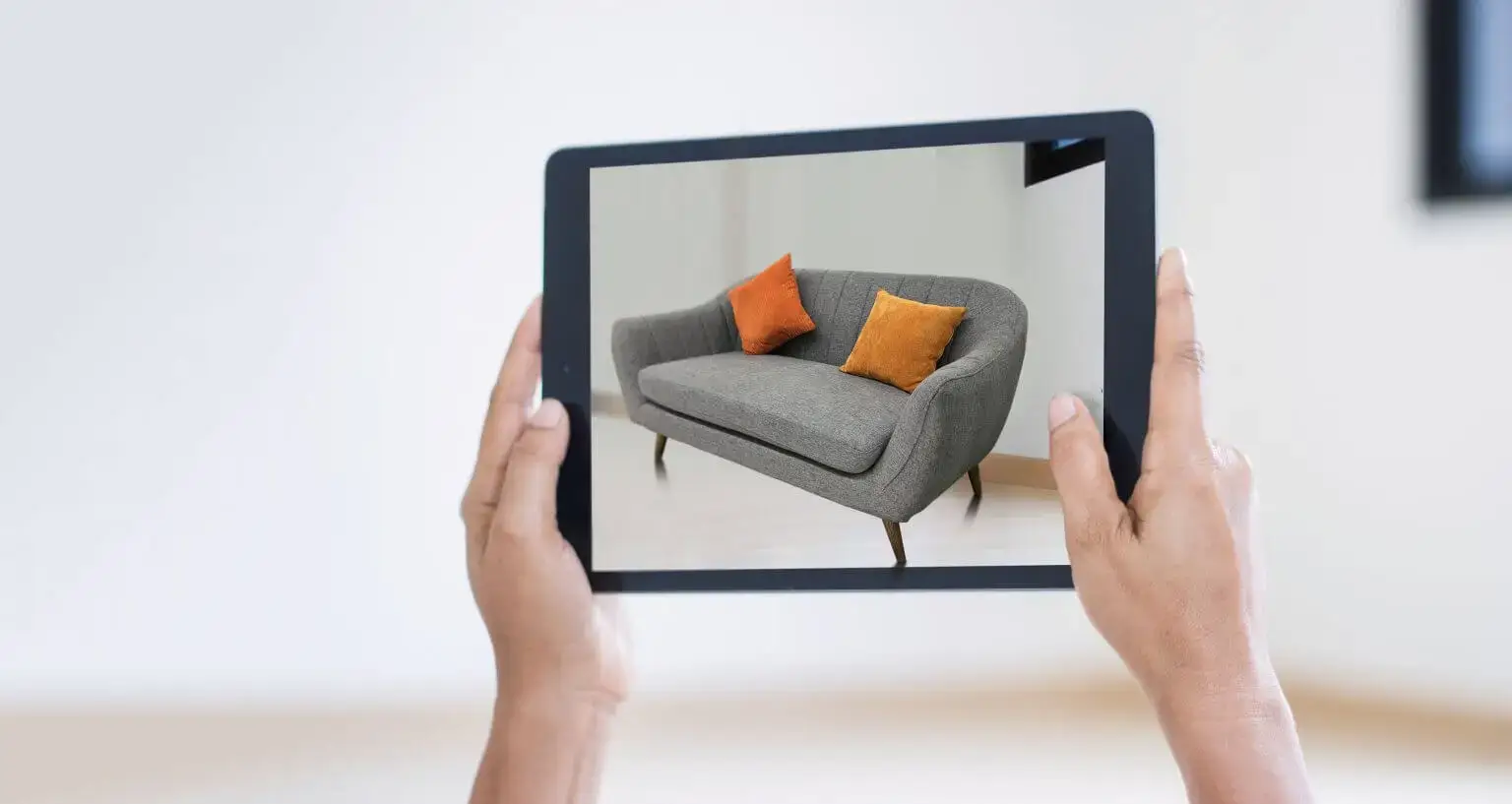
In a world where technology is constantly evolving, augmented reality—often abbreviated as AR—opens the door to a new dimension in digital marketing. AR makes it possible to overlay digital elements onto the physical world, typically via a smartphone, tablet, or dedicated AR glasses. This means customers no longer have to simply view a product in an image or read a description. They can experience the product, try it virtually, and interact with it in their own environment.
For businesses, this creates entirely new opportunities. AR can be used to create more engaging marketing, improve product understanding, deliver stronger brand experiences, and increase confidence in the buying process. This is especially relevant at a time when customers often research products thoroughly online before contacting a company or completing a purchase.
Augmented reality is not only for large technology companies. Smaller businesses, online shops, retail stores, real estate agents, tradespeople, education providers, restaurants, and service companies can also use AR as a practical part of their marketing.
1. Create interactive product experiences
One of the most obvious opportunities with augmented reality is to allow customers to see products in their own environment before they buy.
Imagine a furniture store that sells sofas, desks, or shelving online. Normally, the customer has to imagine how the furniture will fit into the home. How large will the table look in the room? Does the colour match the floor? Will the sofa take up too much space?
With AR, the customer can place a digital 3D model of the product directly in the living room via the phone’s camera. This makes the purchase decision far more tangible. The customer can rotate the product, see its size, and assess whether it fits.
The same applies to businesses that sell:
- Furniture
- Lamps
- Art
- Office equipment
- Kitchen fittings
- Flooring
- Curtains
- Garden equipment
- Machinery
- Fitness equipment
For B2B companies, AR can also be highly effective. A company that sells large machines, production equipment, or technical installations can use AR to show what the equipment will look like in the customer’s warehouse, store, or production area. This can make it easier for the customer to understand the solution and see the value before investing.
2. Make complex products easier to understand
Some products are difficult to explain with text and images alone. This is especially true for technical products, installations, software solutions, building materials, and advanced services.
Here, AR can be used as an educational tool.
A plumbing company can, for example, show how a heating system works behind the wall. A company that sells solar panels can show what the panels will look like on the customer’s roof. A manufacturer of industrial machinery can demonstrate how the machine operates without the customer needing to visit a physical factory.
This makes AR particularly relevant for businesses where the customer often has many questions before buying. When the customer understands the product better, the sales process becomes shorter and more efficient.
Examples:
A window manufacturer can let the customer see different window types on the facade of the house.
A kitchen retailer can show different fronts, worktops, and colours directly in the customer’s kitchen.
An installer can demonstrate how a heat pump is placed outdoors and how it affects the building’s appearance.
A software company can use AR at events and trade fairs, where visitors can see a visual presentation of complex data flows or system architecture.
3. Improve user engagement with AR apps
AR can also be used to create more engaging digital experiences. This can be through a standalone AR app or as a feature within an existing app.
A retail store can let customers scan products in the store and access additional information, videos, user guides, or customer reviews. A restaurant can let guests scan the menu and view dishes in 3D before ordering. A real estate agent can offer virtual viewings where the buyer can see floor plans, furnishing suggestions, or renovation options directly on the screen.
For businesses with physical products, AR can create a stronger connection between online and offline marketing. The customer does not just see an advert—they become an active participant in the experience.
This increases the likelihood that the customer will remember the brand.
4. Implement AR in print and online media
Although much marketing today takes place digitally, printed materials are still used by many businesses. Brochures, business cards, flyers, signage, packaging, and catalogues can be brought to life with AR.
A traditional catalogue typically shows images and product descriptions. With AR, the customer can scan a product image and view a video, a 3D model, a guide, or an interactive presentation.
This can be used across many industries:
A real estate agent can let buyers scan a floor plan and view the property in 3D.
A car dealer can let customers scan an advert and see the car in different colours.
A restaurant can let guests scan a flyer and see today’s dishes or book a table.
A course provider can let readers scan a brochure and watch an introductory video from the instructor.
A trades business can let potential customers scan an advert and see before-and-after examples of previous work.
AR can therefore make static marketing more dynamic and measurable. Instead of simply hoping that a brochure works, the business can see how many people interact with the digital content.
5. Create strong brand experiences
Augmented reality is not only about sales. It can also be used for branding.
A strong AR experience can make a business appear more modern, innovative, and memorable. This matters especially in industries where competition is intense and many businesses look alike.
A clothing brand can let customers try on glasses, hats, or clothing virtually. A fitness centre can run an AR campaign where the user sees exercises demonstrated in the space in front of them. A tourism company can create historical AR experiences where visitors see old buildings or events recreated on site.
For businesses that attend trade fairs, AR can be a powerful sales tool. Instead of bringing large products physically, the business can showcase them in AR. This saves space, attracts attention, and gives the salesperson a better starting point for dialogue.
A concrete example could be a company that sells modular construction. At a trade fair, they can let visitors place a digital building on the table, open it, see the layout, and change materials. This is far more engaging than a standard brochure.
6. Make offline retail more interactive
Physical stores have been under pressure from e-commerce for many years. AR can be a way to make the in-store experience more relevant and modern.
In a store, AR can give customers access to:
- Product videos
- Size guides
- Customer reviews
- Colour variants
- Stock availability
- Offers
- User guides
- Comparisons
An electronics store can let the customer scan a product and see the differences between models. A wine shop can let the customer scan the bottle and see food pairing recommendations. A clothing store can let the customer try colours or styles virtually.
This makes the store more informative and can reduce the need for staff to explain the same things again and again.
7. AR for service businesses
Many people believe that AR only makes sense for businesses that sell physical products. That is incorrect.
Service businesses can also use AR to explain, demonstrate, and sell their services.
Examples:
A cleaning company can show before-and-after effects in an office environment.
A painter can show how different colours will look on the customer’s walls.
A landscape gardener can show a new garden plan directly overlaid on the customer’s current garden.
A hairdresser or beauty clinic can let the customer try hair colours or treatments virtually.
An architect can show what an extension will look like on the house.
A coworking company can use AR to showcase premises, meeting rooms, or office facilities in a more interactive way.
For service businesses, AR is primarily about making the invisible visible. Many services are difficult to assess before they are delivered. AR can help the customer understand the result in advance.
8. Use AR for onboarding and instruction
AR can also be used after the sale. It can strengthen the customer experience and reduce the need for support.
A company that sells technical products can use AR for instructions. The customer scans the product and receives step-by-step guidance directly on the screen. This can include assembly, maintenance, troubleshooting, or safe use.
This is relevant for:
- Machinery manufacturers
- IT equipment
- Home appliances
- Fitness equipment
- B2B installations
- Building materials
- Medical technology equipment
- Industrial solutions
For businesses, this can save time in customer service and provide a better customer experience.
9. Gain audience insights through AR data
Another important advantage of AR is data. When customers interact with AR content, the business can gain insights into what they are interested in.
For example, you can measure:
- Which products customers try virtually
- How long they interact
- Which colours or models they choose
- Where they drop off in the process
- Which experiences generate the most conversions
That knowledge can be used to improve marketing, product development, and sales.
If many customers, for example, try a specific product in AR but do not buy it, this may indicate that the price, the information, or the checkout process needs improvement.
10. Where should businesses start?
AR does not have to start as a large and expensive project. Many businesses can start small.
Start by asking:
- Which product or service is the hardest for customers to understand?
- Where does the most uncertainty arise before purchase?
- Which questions do customers ask again and again?
- Which product would be most powerful to visualise?
- Where can AR make the purchase decision easier?
For many businesses, it will be enough to start with a single AR feature. This could be a 3D model of a product, a virtual viewing, or an interactive brochure.
Most importantly, AR should not be used as a gimmick. It must solve a specific problem for the customer.
Conclusion
Implementing augmented reality in digital marketing opens up new and exciting ways to engage customers. AR makes it possible to create experiences that are more tangible, interactive, and persuasive than traditional marketing.
Businesses that use AR correctly can make it easier for customers to understand products, see solutions in practice, and make confident purchasing decisions. This applies to retail, online shops, service businesses, real estate, construction, education, restaurants, industry, and B2B sales.
AR is not necessarily relevant for every business from day one. However, for businesses where visualisation, trust, and customer experience matter greatly, augmented reality can become a strong competitive advantage.
Combine AR marketing with a professional business address from Flexum Coworking to strengthen your brand even further.